Understanding Energy from Waste (EfW)
Energy from waste (EfW) is one of the most discussed solutions in modern waste management. Yet, it remains widely misunderstood. As landfill space decreases and greenhouse gas limits tighten, communities want to know what happens to their waste and whether EfW is safe.
This article answers the 10 most common questions about EfW to help you understand its role in building cleaner, healthier, and more resilient communities.
1. What exactly is energy from waste (EfW)?
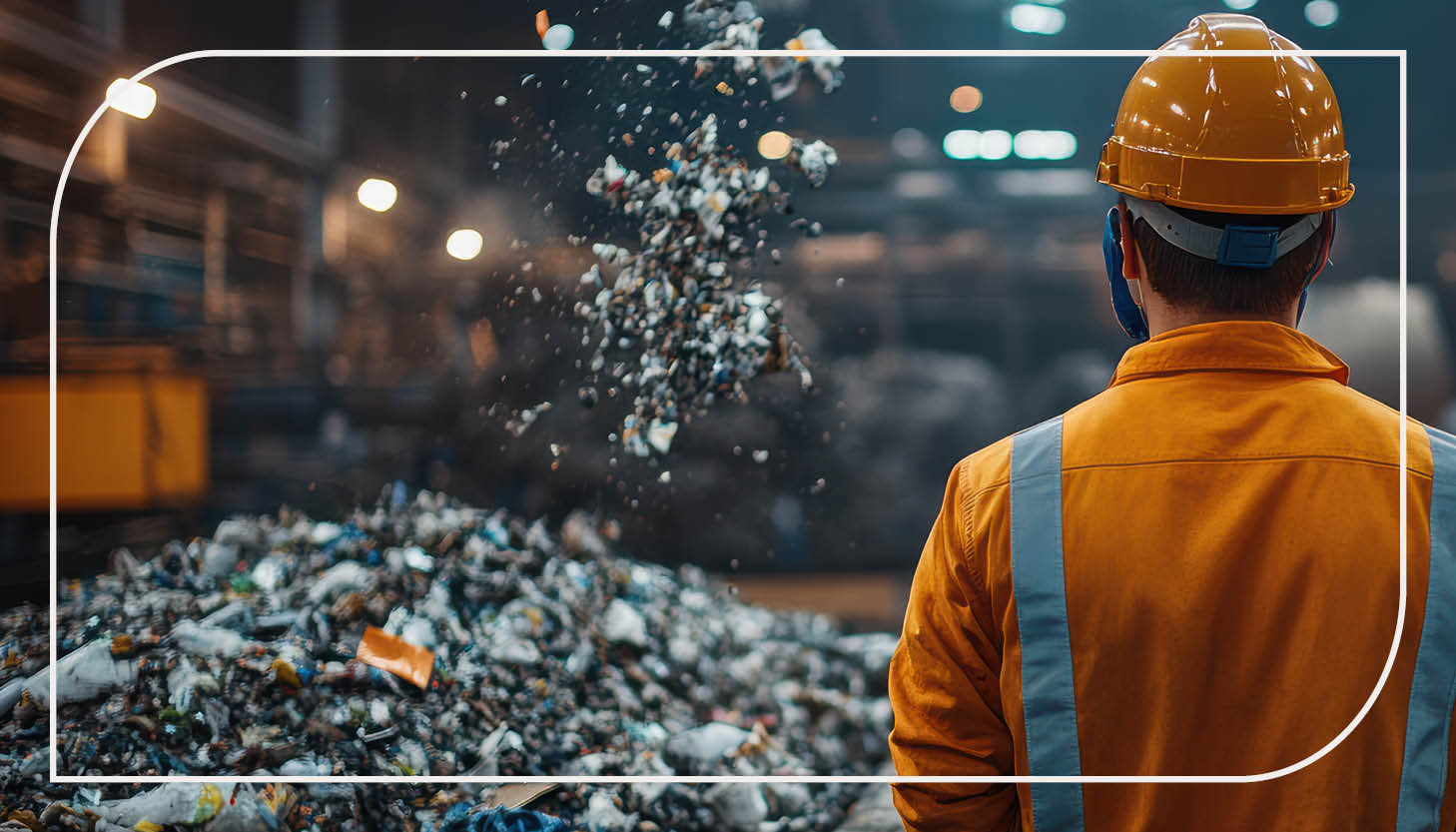
EfW technologies convert non-hazardous residual waste into useful energy. This waste remains after materials have been reduced, reused, recycled, and composted. The recovered energy can take the form of electricity, steam, heat, or hydrogen.
Modern EfW facilities use proven thermal processes and recovery systems to turn waste into energy while minimizing environmental impacts.
2. Is EfW just “incineration”? Is it dangerous?
“Incineration” refers to older waste-burning practices. Modern EfW systems are far more advanced. They are engineered thermal recovery facilities with multiple pollution controls and continuous monitoring.
Public health assessments show that well-managed EfW facilities operate safely, without the health risks associated with uncontrolled burning. Emerald’s environmental screening and independent risk reports confirm that emissions controls keep health risks negligible.
3. How does Emerald control emissions and protect air quality?
Emerald’s facility operates a multi-stage Air Pollution Control (APC) system around the clock. The system includes cooling towers, venturi reactors, baghouse filters, induced draft fans, and a selective catalytic reactor. Together, they remove acid gases, heavy metals, dioxins, furans, particulates, and nitrogen oxides.
The approved environmental screening report confirms that Emerald will upgrade this system during redevelopment. The expansion will use the same advanced technologies to keep emissions within provincial and federal limits. Continuous dispersion modelling, ambient monitoring, and agency oversight ensure compliance and accountability.
4. Will EfW compete with recycling and composting programs?
No. EfW complements these programs, not replaces them. Emerald supports the waste hierarchy—reduce, reuse, recycle, and compost—by handling what remains after these steps.
Residual waste includes contaminated recyclables, mixed plastics, and complex packaging. Emerald’s expansion is designed to process only post-recycling material, ensuring it strengthens Ontario’s circular economy rather than competing with it.
5. What happens to the ash and residues from EfW?
EfW processes produce bottom ash, along with smaller amounts of fly ash and filter cake. Emerald recovers metals from the bottom ash for recycling and uses the remaining ash as landfill cover to control odours and aid compaction.
The company is also developing technology to reuse bottom ash in engineered aggregate and concrete. This aligns with Zero Waste goals by keeping more materials out of landfills. Any residues from air pollution control are managed and disposed of safely in accordance with strict regulations.
6. How much energy can Emerald’s facility produce?
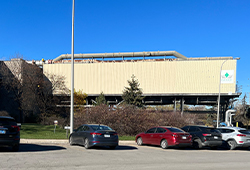
Today, Emerald processes about 500 tonnes of waste daily—or 180,000 tonnes per year. This generates roughly 10 megawatts (MW) of electricity, enough to power the plant and 6,000 homes.
The facility also supplies steam to a nearby recycled paper mill, reducing its reliance on fossil fuels. After redevelopment, capacity will rise to 900,000 tonnes per year, producing up to 100 MW—enough to power the facility and about 60,000 homes. The expansion will also enable hydrogen generation and district heating.
7. Does EfW reduce greenhouse gas emissions compared to landfills?
Yes. Studies show EfW produces fewer greenhouse gas emissions than landfill disposal. By converting post-recycling waste into energy, EfW prevents methane generation and offsets fossil fuel use.
Emerald’s environmental screening report confirms that diverting residual waste to EfW substantially reduces net GHG emissions, especially where landfill gas capture is incomplete or waste travels long distances for disposal.
8. Are communities involved in EfW projects?
Absolutely. Community involvement is central to Emerald’s approach. During the environmental screening process, the company hosted open houses and public meetings to gather feedback.
Emerald maintains transparency through public reporting, monitoring data, and open communication channels. Clear complaint procedures ensure that community voices continue to shape operations.
9. What concerns do people raise about EfW?
Common concerns include air quality, dioxins, furans, metals, truck traffic, and ash management. Emerald addresses these through its advanced APC system, which removes pollutants before gases reach the atmosphere. Dispersion modelling confirms air quality remains protected.
Traffic routing minimizes truck impact, and strict ash-handling procedures ensure safety. Emerald’s focus on transparency, oversight, and community dialogue keeps risk management open and accountable.
10. When does EfW make sense?
EfW is most effective in urban areas with limited landfill space and strong recycling programs. It provides a reliable, local way to handle non-recyclable waste while producing electricity, heat, or hydrogen.
When combined with emission controls, diversion programs, and transparent oversight, EfW becomes a key part of a circular economy. Emerald’s redevelopment exemplifies this model—expanding capacity while committing to monitoring, innovation, and community trust.
Final Takeaway
Energy from waste offers a practical, science-backed solution to landfill challenges. With strict emission controls, public transparency, and continuous monitoring, Emerald Energy from Waste demonstrates how EfW can safely power cleaner, more sustainable communities across Ontario.